Commodity policy jitters drag Jakarta stocks; rupiah near historic lows
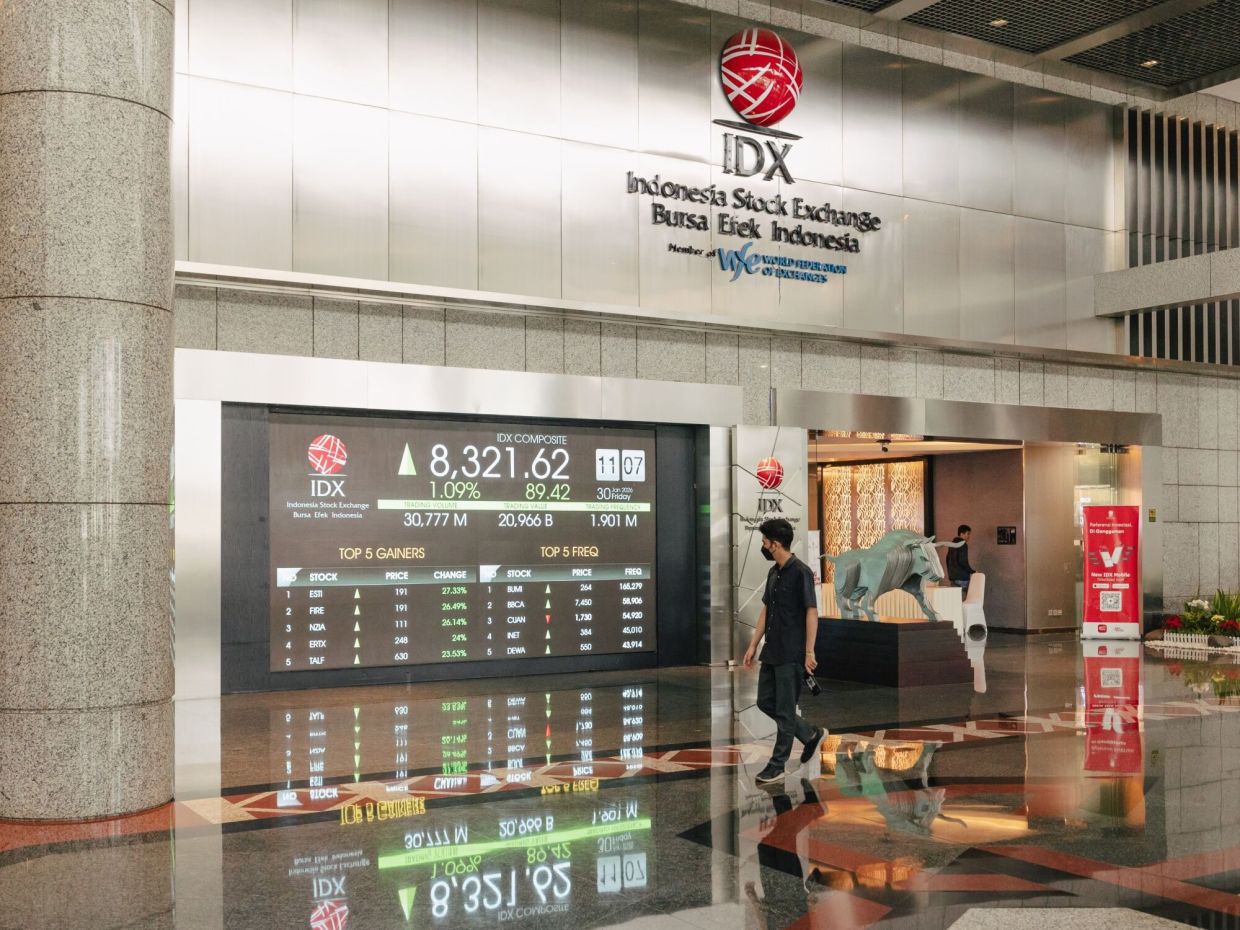
FILE PHOTO: Stock market information displayed at the lobby of the Indonesia Stock Exchange (IDX) in Jakarta, Indonesia, Friday, Jan 30, 2026. -- Bloomberg Indonesia's rupiah stayed near historic lows ...
RSS · July 21, 2026 at 1:25 PM
JAKARTA, 21 JULY 2026 —
Indonesia's rupiah remained near historic lows, while Jakarta stocks were on track for their steepest weekly drop since the pandemic, as investors expressed concerns over the country's policy direction following a significant rate hike. The rupiah weakened by approximately 0.5% to 17,720 per dollar by 0654 GMT, hovering close to the record low of 17,745 reached earlier in the week. This decline has resulted in the currency losing nearly 6% of its value this year, making it one of the worst performers in Asia.
Market Impact
The recent downturn in the Indonesian economy can be attributed to various factors, including higher oil prices, elevated U.S. yields, and a stronger dollar, which have put pressure on import-heavy economies. In an effort to support the rupiah, Bank Indonesia implemented a 50-basis-point rate hike, despite inflation remaining relatively contained. Furthermore, the government unveiled an ambitious plan to centralize exports of key commodities, which has sparked concerns among investors. According to Chandresh Jain, emerging market Asia rates and FX strategist at BNP Paribas, "The high yield environment globally is generally not good for IDR," and markets may test Bank Indonesia at future meetings by pushing dollar/rupiah and bond yields higher.
The Jakarta stock market has also been impacted, with the benchmark index falling for eight consecutive sessions through Thursday, resulting in a loss of over 15% during that period. The index is down approximately 29% this year, with much of the recent equity-market anxiety centered on plans to tighten control over coal and other commodity exports. These plans have raised fears of sales disruptions, tighter curbs on private firms, and weaker earnings visibility in a key foreign exchange sector. Jain noted that efforts to curb export value manipulation, including mis-invoicing and illegal mining practices, would be positive for Indonesia in the long run, but private firms may view the tighter rules as negative.
The situation in Indonesia has also had an impact on other currencies in the region. The Indian rupee was little changed after a run of record lows, with traders citing likely dollar-selling intervention by the Reserve Bank of India. The South Korean won weakened by 0.6% to 1,517 per dollar and is down over 5% this year. The Philippine peso was flat and has lost nearly 5% this year, with inflation concerns keeping policy tightening expectations alive. In contrast, the Taiwanese stock market rose by over 2% on Nvidia-driven gains, while South Korean shares added 0.4%. Bourses in China, Manila, Kuala Lumpur, and Singapore also advanced.
The decline of the Indonesian rupiah and the Jakarta stock market has significant implications for the Malaysian economy. As a neighboring country, Malaysia's economy is closely tied to Indonesia's, and any instability in the region can have a ripple effect. The Malaysian ringgit has also been impacted by the strength of the US dollar and the decline of other currencies in the region. Details on the specific impact on Malaysia are not yet available, but it is likely that the country's economy will be affected by the current situation in Indonesia.
In terms of stakeholder perspectives, Chandresh Jain noted that the high yield environment globally is generally not good for the Indonesian rupiah. He also stated that markets may test Bank Indonesia at future meetings by pushing dollar/rupiah and bond yields higher. Other stakeholders, including investors and traders, have expressed concerns over the policy direction in Indonesia and the potential impact on the economy. The government's plan to centralize exports of key commodities has been met with skepticism, and many are waiting to see how the situation will unfold.
As the situation in Indonesia continues to evolve, it is likely that the Malaysian economy will be impacted. The decline of the Indonesian rupiah and the Jakarta stock market has already had a ripple effect on the region, and it is essential for investors and policymakers to closely monitor the situation. In the coming weeks and months, it will be crucial to see how the Indonesian government addresses the concerns of investors and stakeholders, and how the economy responds to the current challenges. With the region's economies closely tied, any instability in Indonesia can have far-reaching implications, and it is essential to prioritize stability and cooperation to ensure the continued growth and development of the ASEAN region.
In conclusion, the current situation in Indonesia has significant implications for the Malaysian economy and the region as a whole. The decline of the Indonesian rupiah and the Jakarta stock market has sparked concerns among investors and stakeholders, and it is essential to closely monitor the situation. As the region's economies continue to evolve, it is crucial to prioritize stability and cooperation to ensure the continued growth and development of the ASEAN region. With the Indonesian government's plan to centralize exports of key commodities and the potential impact on the economy, it is likely that the situation will continue to unfold in the coming weeks and months, and it is essential to stay informed and up-to-date on the latest developments.
Related: IDX · Jakarta